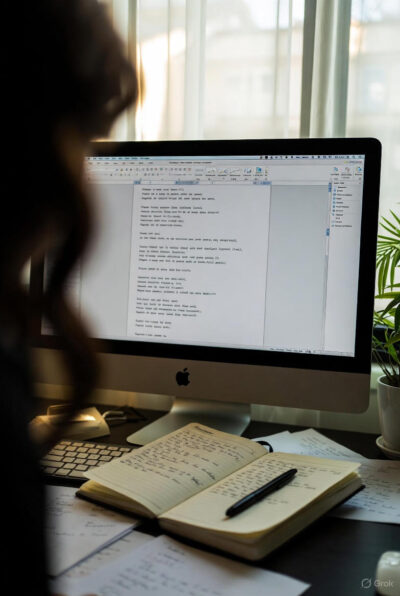
Why I Translate Songs Heart for Heart: A Very Personal Story
Most translators are brilliant at grammar and vocabulary. But songs are not grammar, songs are feelings set to melody. And feelings hide in the tiniest corners of a language: in the way a word falls on the beat, in the warmth of a vowel, in the little sigh between two lines.
I was born in Germany, spoke only German until I was eight. Then I was moved to Australia. Suddenly I had to dream, laugh, cry and sing in English, at school, with friends, on the radio. English became just as much “home” as German ever was.
Years later I came back to Germany, studied, worked, fell in love again with German poetry and Schlager. I even taught English as a TESOL teacher in Australia, helping others find their voice in a new language.
This lifelong ping-pong between two cultures gave me something very rare: true mother-tongue intuition in both German and English. I don’t translate word for word, I translate heart for heart, rhythm for rhythm.
When I turn a tender German song into English, the cowboy sunset in “My Palomino Girl” feels exactly the same. When I bring an English pop chorus into German, it still makes 15,000 people raise their phones and sway in perfect unison.
Because for me, both languages aren’t learned, they’re lived.
And that, I believe, is what you hear (and feel) in every translated line. ♡
With love and lyrics,
Evelin